# extract number of particle from surface
**URL:** https://discourse.paraview.org/t/extract-number-of-particle-from-surface/15483
**Category:** ParaView Support
**Created:** [October 2, 2024, 6:47am UTC](https://discourse.paraview.org/t/extract-number-of-particle-from-surface/15483 "2024-10-02T06:47:02Z")
**Posts on this page:** 6
**Page:** 1
### Author:  [@harsha](https://discourse.paraview.org/u/harsha)
#### Post date: [October 2, 2024, 6:47am UTC](https://discourse.paraview.org/t/extract-number-of-particle-from-surface/15483/1 "2024-10-02T06:47:02Z")
I am post processing a cough injection to study the dispersion of the particles inside a classroom. I want to count the number of particle in each surface. example number of particles in any one of the table in the classroom. How can I count them?
---
### Author:  [@mwestphal](https://discourse.paraview.org/u/mwestphal)
#### Post date: [October 2, 2024, 7:23am UTC](https://discourse.paraview.org/t/extract-number-of-particle-from-surface/15483/2 "2024-10-02T07:23:01Z")
> [@harsha](#):
>
> I want to count the number of particle in each surface
I think only the LagrangianParticleTracker can do that, but its not trivial.
---
### Author:  [@harsha](https://discourse.paraview.org/u/harsha)
#### Post date: [October 2, 2024, 7:42am UTC](https://discourse.paraview.org/t/extract-number-of-particle-from-surface/15483/3 "2024-10-02T07:42:02Z")
hi @mwestphal I haven’t used Lagrangian particle tracker in Para view. Is there any tutorial available which would be of great help.
---
### Author:  [@mwestphal](https://discourse.paraview.org/u/mwestphal)
#### Post date: [October 2, 2024, 7:44am UTC](https://discourse.paraview.org/t/extract-number-of-particle-from-surface/15483/4 "2024-10-02T07:44:04Z")
[https://www.kitware.com/vtk-and-paraview-add-highly-configurable-particle-tracker/](https://www.kitware.com/vtk-and-paraview-add-highly-configurable-particle-tracker/)
---
### Author:  [@harsha](https://discourse.paraview.org/u/harsha)
#### Post date: [October 3, 2024, 5:45am UTC](https://discourse.paraview.org/t/extract-number-of-particle-from-surface/15483/5 "2024-10-03T05:45:07Z")
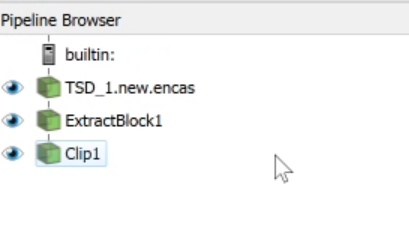
The Lagrangian particle data is from Ansys fluent. The particle data represented is the particle ID. So if use clip on the surface of interest and open the spreadsheet view. Does number of rows equals the number of particles inside the clip ?? Please let me know if I am in the right direction.
---
### Author:  [@mwestphal](https://discourse.paraview.org/u/mwestphal)
#### Post date: [October 3, 2024, 11:13am UTC](https://discourse.paraview.org/t/extract-number-of-particle-from-surface/15483/6 "2024-10-03T11:13:49Z")
Please read the blog I shared if the lagrangian particle tracker interest you, note that it will require C++ programming and compiling.