# NVIDIA index error/ Paraview 5.10.1 and 5.10.0 on Mac book Pro M1
**URL:** https://discourse.paraview.org/t/nvidia-index-error-paraview-5-10-1-and-5-10-0-on-mac-book-pro-m1/10862
**Category:** ParaView Support
**Created:** [November 26, 2022, 1:53am UTC](https://discourse.paraview.org/t/nvidia-index-error-paraview-5-10-1-and-5-10-0-on-mac-book-pro-m1/10862 "2022-11-26T01:53:08Z")
**Posts on this page:** 5
**Page:** 1
### Author:  [@Kei\_Yamamoto](https://discourse.paraview.org/u/Kei_Yamamoto)
#### Post date: [November 26, 2022, 1:53am UTC](https://discourse.paraview.org/t/nvidia-index-error-paraview-5-10-1-and-5-10-0-on-mac-book-pro-m1/10862/1 "2022-11-26T01:53:09Z")
Hi,
I’m trying to use NVIDIA index using `pvNVIDIAindex ` on M1 Mac book pro where input file is `xdmf, h5` format.
When I try change the representation to NVIDIA IndeX` for 3D velocity data, I get the following error.
```auto
nvindex: PVPLN init error: The data array 'velocity_save_deg_2' has 3 components, which is not supported by NVIDIA IndeX.
nvindex: PVPLN init error: Failed to initialize the mapper in vtknvindex_irregular_volume_mapper::Render.
nvindex: PVPLN init error: NVIDIA IndeX rendering was aborted.
```
I saw an exmple of speeding up volume rendering with NVIDIA index, so I thought it could be used for 3D velocity, but, as the error message says, it seems like it can not be used for 3D data.
Am I doing something wrong here or NVIDIA index can not be used for 3D data?
I’m happy to share my data if necessary.
Best,
---
### Author:  [@mwestphal](https://discourse.paraview.org/u/mwestphal)
#### Post date: [November 28, 2022, 8:40am UTC](https://discourse.paraview.org/t/nvidia-index-error-paraview-5-10-1-and-5-10-0-on-mac-book-pro-m1/10862/2 "2022-11-28T08:40:48Z")
Hi @Kei_Yamamoto
I have no issues visualizing a image data with a 3 componenent points arrays with the nvidia index plugin here.
Sharing your data may be needed indeed.
Best,
---
### Author:  [@Kei\_Yamamoto](https://discourse.paraview.org/u/Kei_Yamamoto)
#### Post date: [November 19, 2023, 12:08pm UTC](https://discourse.paraview.org/t/nvidia-index-error-paraview-5-10-1-and-5-10-0-on-mac-book-pro-m1/10862/3 "2023-11-19T12:08:56Z")
Hi @mwestphal
Sorry for not responding a while ago. I tried NVIDIA index again but got the same problem.
Please use the data [here](https://drive.google.com/drive/folders/1Q6438kRJUG5SUNMHFCtf9TqeLgA0j8BY?usp=share_link) and let me know if it works for you.
---
### Author:  [@mwestphal](https://discourse.paraview.org/u/mwestphal)
#### Post date: [November 20, 2023, 9:57am UTC](https://discourse.paraview.org/t/nvidia-index-error-paraview-5-10-1-and-5-10-0-on-mac-book-pro-m1/10862/4 "2023-11-20T09:57:24Z")
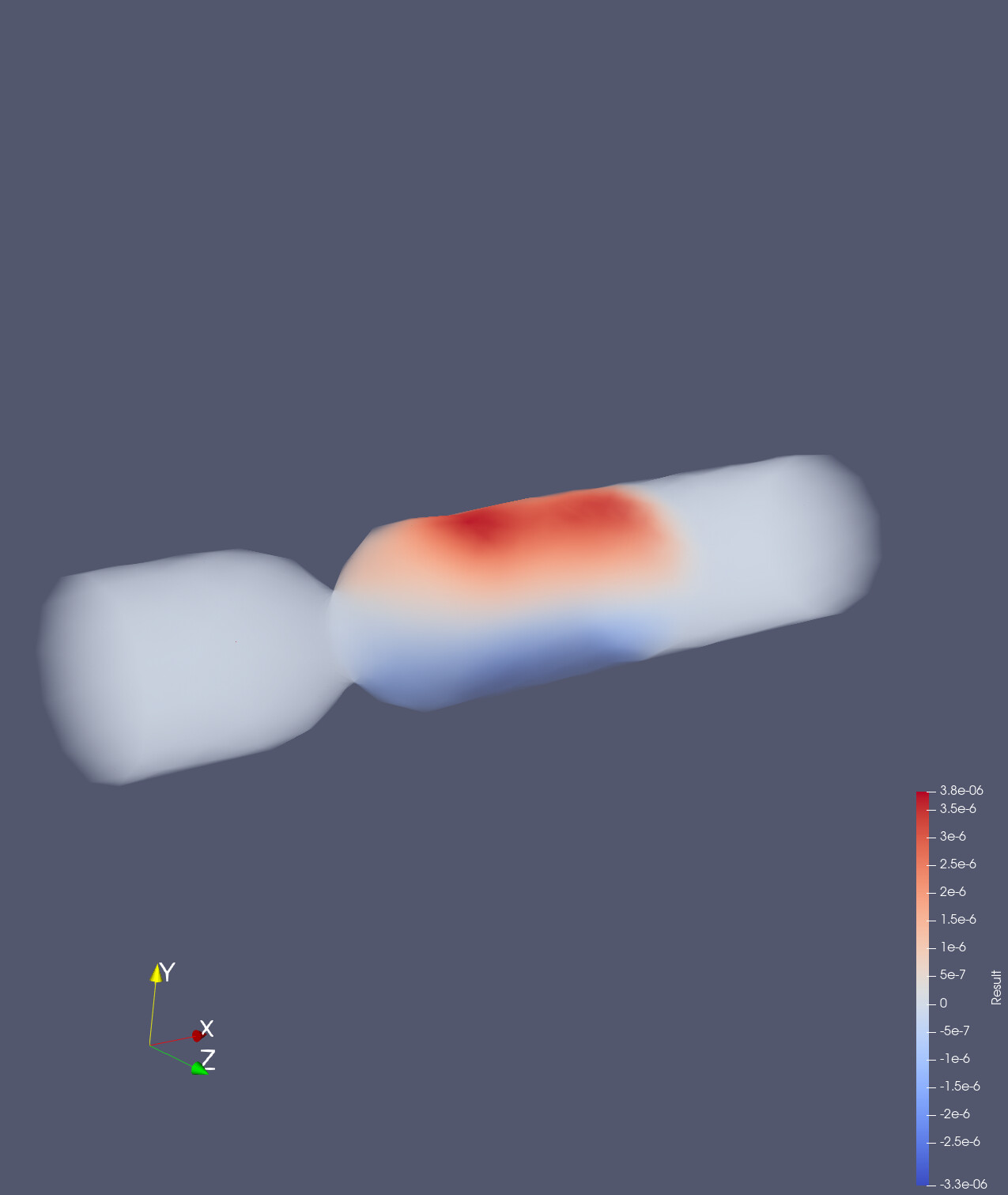
Nevermind, NVIDIA index indeed does not support three components array.
You can extract single component using the calculator to visualize them.
---
### Author:  [@cory.quammen](https://discourse.paraview.org/u/cory.quammen)
#### Post date: [November 21, 2023, 3:36am UTC](https://discourse.paraview.org/t/nvidia-index-error-paraview-5-10-1-and-5-10-0-on-mac-book-pro-m1/10862/5 "2023-11-21T03:36:35Z")
> [@mwestphal](#):
>
> You can extract single component using the calculator to visualize them.
You can also use the **Extract Component** filter to extract single components.