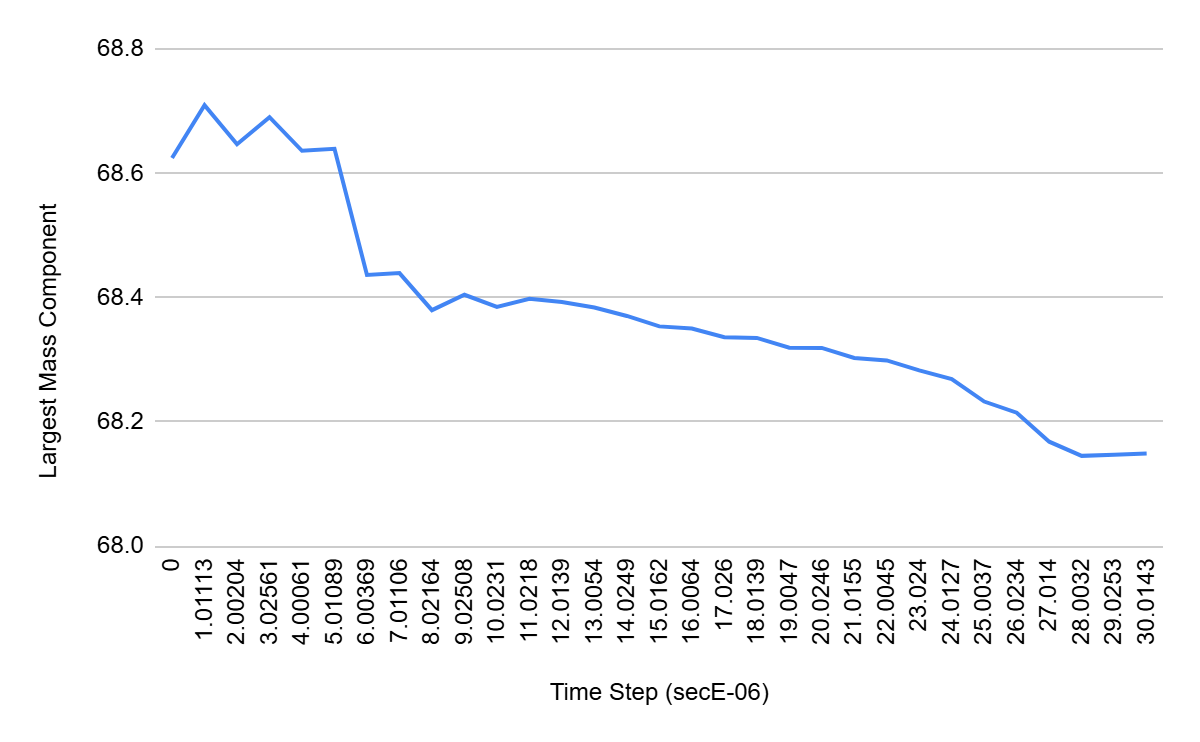
I’m using CTH to simulate a small aluminum 2017-t4 sphere (4mm) impacting a 12.7mm x 12.7mm Ultem 9085 plate (projectile velocity 2.835km/s and target thickness of 3.75mm). As of now, the amount of mass loss of the plate overtime seems to be moving up and down, rather than strictly down. I am very new to paraview, and do not know how to make a graph of the mass of the plate over time directly in the software (right now it includes the debris/ejecta in a material 2 graph, making the graph of mass loss the same overtime). However, I did have 30 time steps that were put into paraview from my spcth file, and I manually documented the mass of the largest component at each time step (which I assumed to be the mass of the plate without ejecta-- please let me know if this is wrong). I graphed it below for clarity in fluctuations (zoomed in significantly). Logically, mass of the target plate increasing in any capacity should not happen, but it seems to happen throughout the entire collision. I was told that adjusting the Material Fraction Threshold in the material interface filter that I used to view the mass data, would help me. I do not fully understand what number for the Material Fraction Threshold would be best or how to go about deciding what it should be, so if there is any better way to approach the mass analysis or adjust the material fraction threshold, I would sincerely appreciate the input. Thank you!